The setup.
Engaged audiences are one of the most expensive assets a company can build. Paid media buys clicks. A motivated, self-selected community buys trust — and trust converts. That's why community-led growth has moved from a 'nice to have' to a core GTM strategy for companies across SaaS, EdTech, healthcare, and beyond.
But building a community that actually works is hard. The idea has to resonate broadly enough to attract people, but specifically enough that members feel they belong. Acquisition is the easy part — retention is where most communities quietly collapse. Keeping people engaged after the initial excitement requires understanding what they actually need, not what you assumed when you wrote the mission statement.
The market demand is real: companies that own a community own a distribution channel, a research panel, a product feedback loop, and a brand amplifier — all at once.
What had to be true.
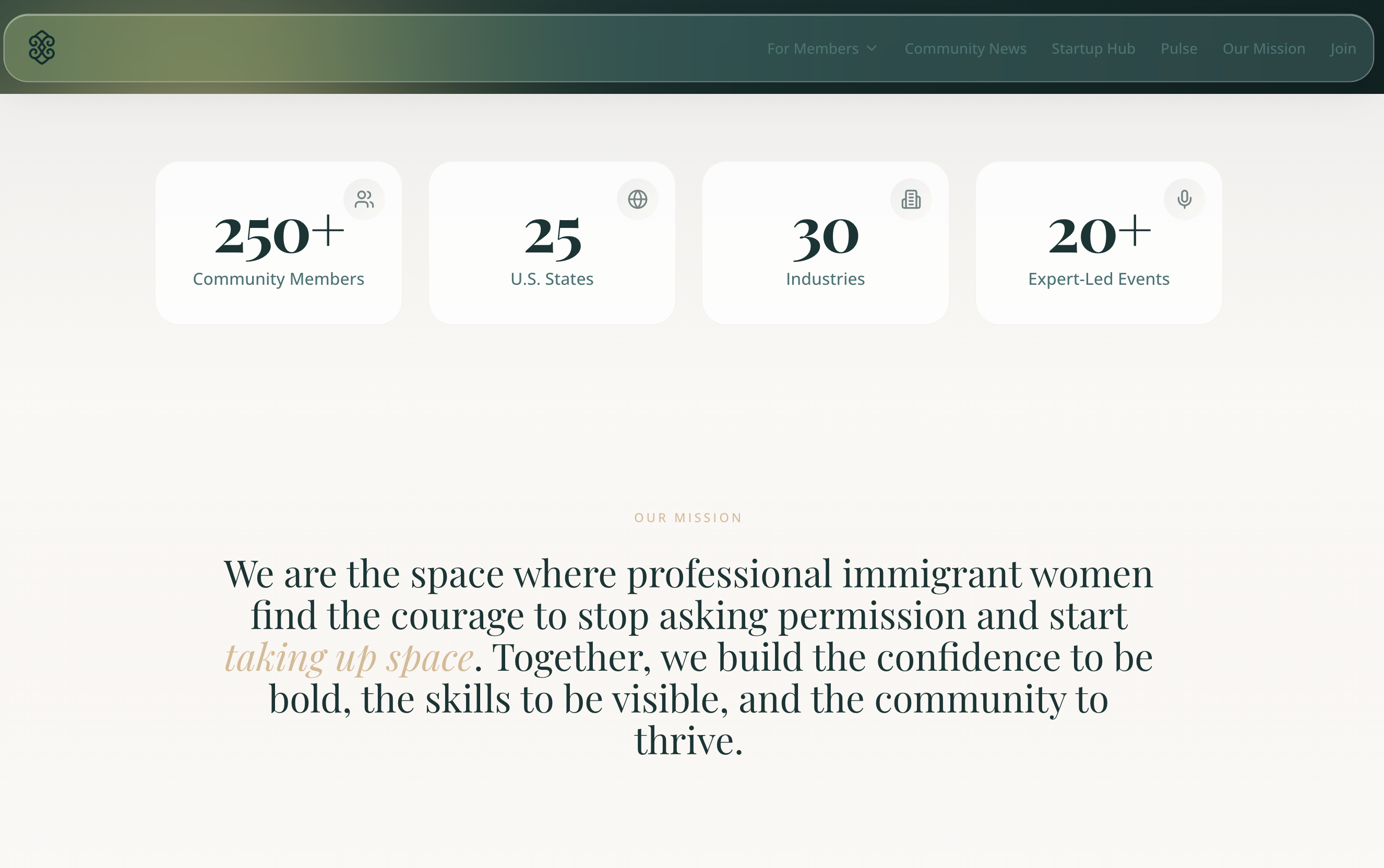
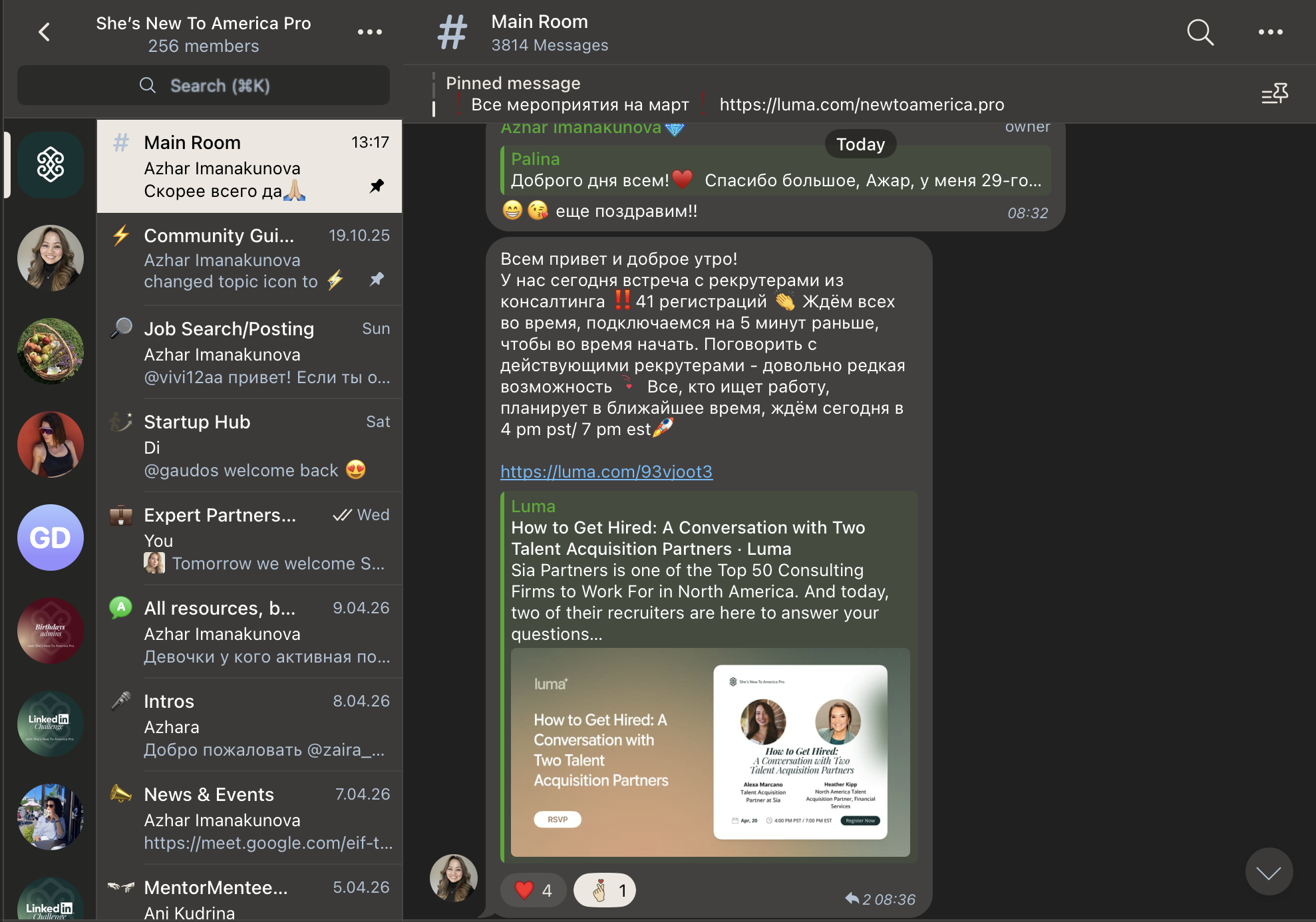
First online community for immigrant women focused on career growth in the US.
The challenge wasn't finding an audience. Immigrant professional women are a large, underserved group with real, documented friction points in the US job market. The hard part was finding the idea that would hold them together long-term.
A community built around a finite goal — getting a job, passing a certification — dissolves the moment members succeed. The positioning needed an idea people could keep moving toward indefinitely. Something that didn't resolve. The answer: We are the space where professional immigrant women find the courage to stop asking permission and start taking up space.
That framing — confidence, visibility, belonging — has no finish line. It's always relevant, regardless of career stage.
The second challenge was building the systems that would turn that idea into an actual product: onboarding that delivered value fast, retention mechanics grounded in real member behavior, and revenue streams that didn't compromise the community-first positioning.
How it moved.
What I actually did.
Before any copy was written, I ran early adopter interviews. What came out reshaped the ICP significantly — the audience wasn't broadly 'immigrant women seeking career growth.' It was women at a specific inflection point: professionally capable, but stuck because their networks didn't transfer across borders.
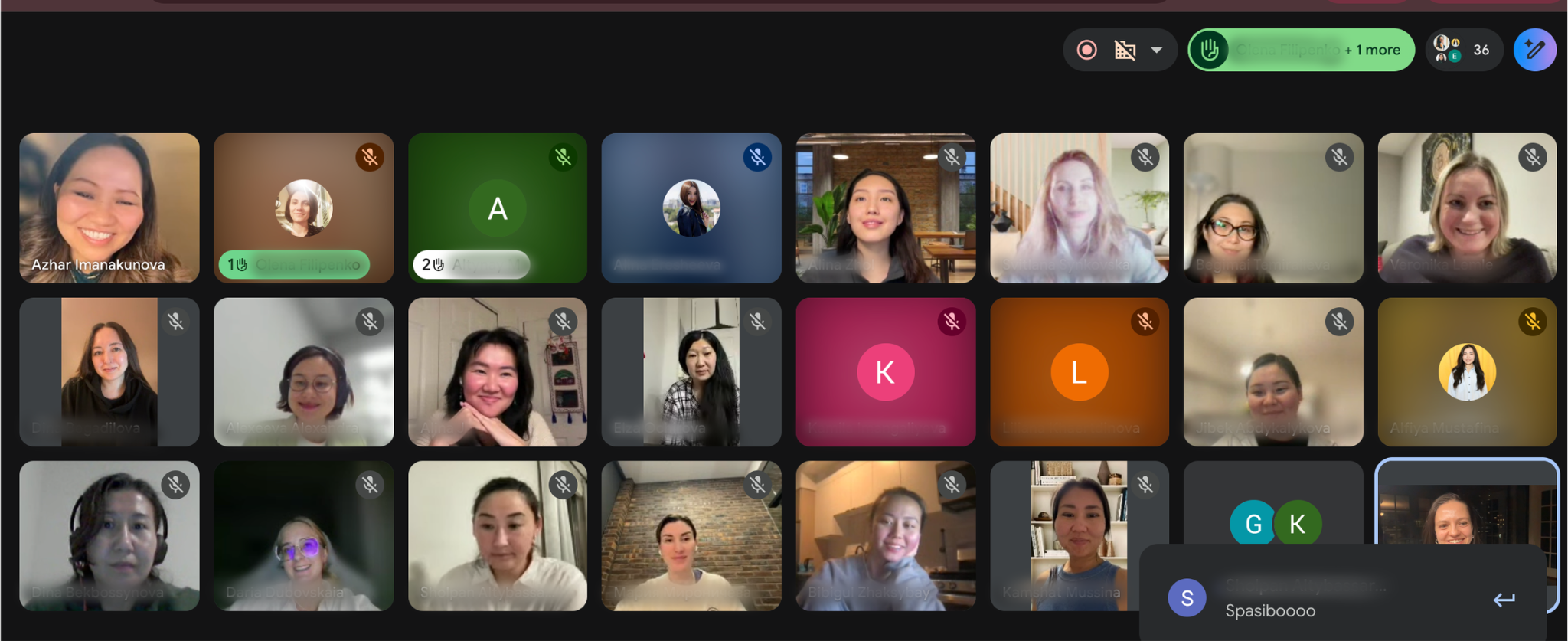
That clarity drove the mission statement, the activity framework, and every content decision downstream. Onboarding was designed around one goal: get a new member to their first meaningful interaction fast. Retention mechanics were tied to formats and topics the research showed members would return to. Revenue streams were tested against validated pain points before any public launch.
Measurable outcomes.
- Grew community to 250 members
- Achieved sub-2% churn over 6 months
- Reached break-even through positioning-led revenue design
- Zero paid acquisition budget